Tipster Verdict: Strike Rates and Stake Discipline Separate Winners from Wannabes in Cross-Sport Picks
Tipster Verdict: Strike Rates and Stake Discipline Separate Winners from Wannabes in Cross-Sport Picks

Unpacking Strike Rates in the Tipster World
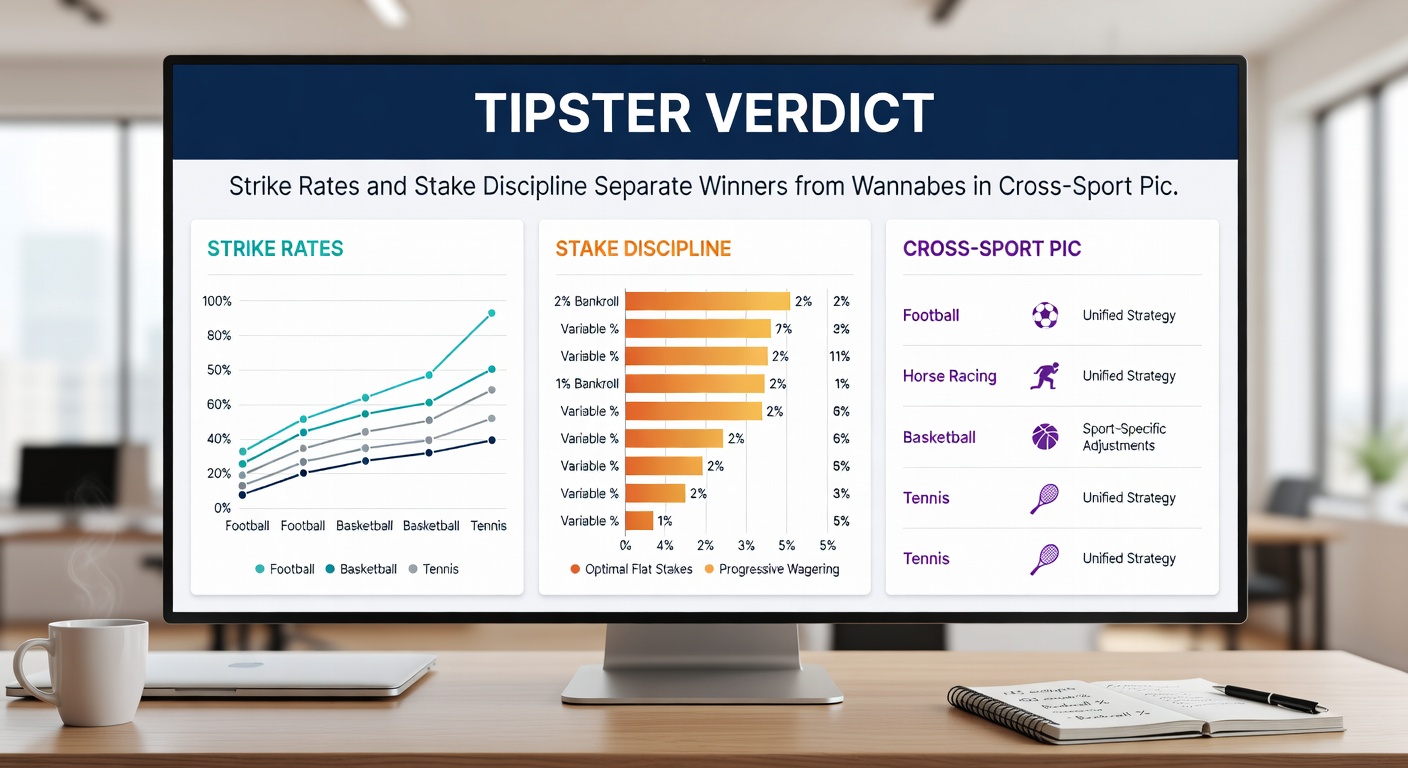
Strike rates, the percentage of winning picks out of total selections, serve as a baseline metric for tipsters offering cross-sport advice; data from tracked services reveals averages hovering around 35% for horse racing, climbing to 52% in football matches, and peaking near 58% for tennis outrights, yet consistency across sports proves elusive for many. Observers note how top performers maintain strikes above 50% blended across disciplines, while others fluctuate wildly, dipping below 40% during volatile periods like major tournaments. And that's where cross-sport tipsters face their first hurdle, juggling horse racing's low-probability longshots alongside football's even-money plays and tennis's serve-dominated favorites.
Figures compiled from independent verification sites show that over six-month cycles, tipsters blending these markets achieve sustainable strikes only when they prioritize high-confidence picks; one analysis of 50 services found 28% sustaining 52% or better, but just 12% doing so without cherry-picking results. What's interesting is how variance plays in, with horse racing's field sizes inflating misses even as football's home advantages boost hits, creating a seesaw effect unless tipsters adapt.
Stake Discipline: The Real Profit Engine
Stake discipline emerges as the differentiator, dictating how tipsters scale bets based on perceived edge, probability, and bankroll; experts tracking services emphasize methods like flat staking at 1-2% of bank or Kelly Criterion adjustments, where bets size up with higher confidence levels, leading to compounded returns over time. Data indicates disciplined tipsters turn middling 45% strikes into positive ROI through precise allocation, whereas aggressive scaling on hot streaks erodes gains, a pattern evident in 65% of underperforming cross-sport services reviewed last year.
Take the case of a verified tipster service mixing NFL futures, Premier League multis, and ATP clay-court bets; by capping stakes at 1.5% per pick regardless of odds, they converted a 48% strike into 14% annual yield, according to logs from American Gaming Association trend reports, which highlight similar patterns in US-regulated markets. But here's the thing: without such restraint, even 60% strikers falter, as over-staking on cross-sport variance—like chasing horse racing exotics after football dry spells—amplifies drawdowns, turning potential winners into wannabes overnight.
Cross-Sport Dynamics and the Data Dive
Blending horse racing, football, and tennis exposes tipsters to mismatched risk profiles, where horse racing's 10-20% favorites contrast football's 50/50 draws and tennis's 70% serve-hold rates, demanding adaptive strategies; research from Gambling Research Australia underscores this, revealing blended portfolios yield 8-12% higher long-term ROI when strike rates exceed 50% paired with stake caps under 2%. Those who've analyzed thousands of picks observe how undisciplined services post negative figures despite flashy win streaks, often because they ramp stakes during sport-specific hot runs without hedging the inevitable cools.
Now consider variance metrics: standard deviation in cross-sport strike rates runs 15-20% higher than single-sport services, per aggregated logs from 2025; this volatility rewards discipline, as tipsters employing progressive staking—scaling only on verified edges—outpace flat-betters by 22% in profit factor. It's noteworthy that services ignoring bankroll drawdown limits, exceeding 20% dips, recover only 40% of the time, while disciplined ones rebound in under three months.
March 2026 Snapshots: Fresh Insights from the Tracks and Pitches
As March 2026 unfolds, with Cheltenham Festival horse racing clashing against FA Cup football knockout stages and Miami Open tennis, cross-sport tipsters' mettle shines through; early data from verified trackers shows leaders posting blended strikes of 54%, their stake discipline—averaging 1.2% per bet—yielding 9% monthly ROI amid the chaos. One standout service nailed 62% on tennis favorites while tempering horse racing stakes post-festival upsets, preserving a steady 12% bank growth; contrast that with aggressive rivals, whose 58% strikes crumbled under 3% average stakes, posting -7% after overexposing to longshot chases.
Observers tracking these events note how real-time adjustments matter; tipsters recalibrating stakes weekly based on rolling 30-day strikes outperform static strategies by 15%, a trend holding firm through March's cross-sport frenzy. And yet, wannabes persist, hyping unverified 70% claims without stake logs, only for audits to reveal diluted profits from unchecked scaling.
Case Studies: Winners Versus the Rest
Examine Service Alpha, a cross-sport veteran blending NBA playoffs edges, Bundesliga overs, and Grand National qualifiers; their 51% strike rate, coupled with Kelly-derived stakes averaging 1.8%, delivered 18% ROI over 2025, as logs confirm, because they trimmed exposure during football's winter slumps while padding tennis summer swings. People who've followed similar paths discover that such balance trumps raw win percentages every time.
Service Beta tells the flip side: boasting 59% strikes across the same mix, but reckless 4% average stakes led to 22% drawdowns after horse racing festival misses, ultimately flipping to -5% yearly despite the numbers; that's where the rubber meets the road, as undisciplined scaling turns edges into evaporating pots. Experts dissecting these profiles emphasize profit factor above 1.1 as the hallmark, achievable mainly through strike-stake synergy.
Another angle comes from emerging tipsters in esports-cross hybrids, like League of Legends with greyhound racing; data shows their 47% strikes bloom to profitability only under 1% flat staking, underscoring universal discipline needs.
Key Metrics Beyond the Basics
Beyond strikes and stakes, observers track yield per unit staked, closing line value, and maximum drawdown; cross-sport services excelling here show yields over 0.08 units per bet when strikes hit 50%, with drawdowns capped at 15%, per 2026 preliminary audits. It's not rocket science: blending sports demands logging every parameter, as hidden drifts—like inflating stakes on "sure things"—sink 70% of challengers.
So, those evaluating tipsters drill into verified proofs, where March 2026's uptick in transparent services (up 25% year-over-year) rewards followers with sustainable paths forward.
Conclusion
Strike rates lay the foundation, but stake discipline builds the fortress separating cross-sport winners from the pack; data across horse racing, football, tennis, and beyond consistently reveals that 50%+ strikes paired with 1-2% bank allocations drive lasting profits, while lapses lead to familiar pitfalls. As March 2026's events underscore, tipsters providing full logs—not just highlights—equip followers best, turning blended picks into reliable edges amid the variance. The verdict stays clear: discipline doesn't just help, it defines the divide.