Bettor's Audit Arsenal: Spreadsheet Systems That Expose Tipster True Value in Singles, Multis, and Live Wagers
Bettor's Audit Arsenal: Spreadsheet Systems That Expose Tipster True Value in Singles, Multis, and Live Wagers
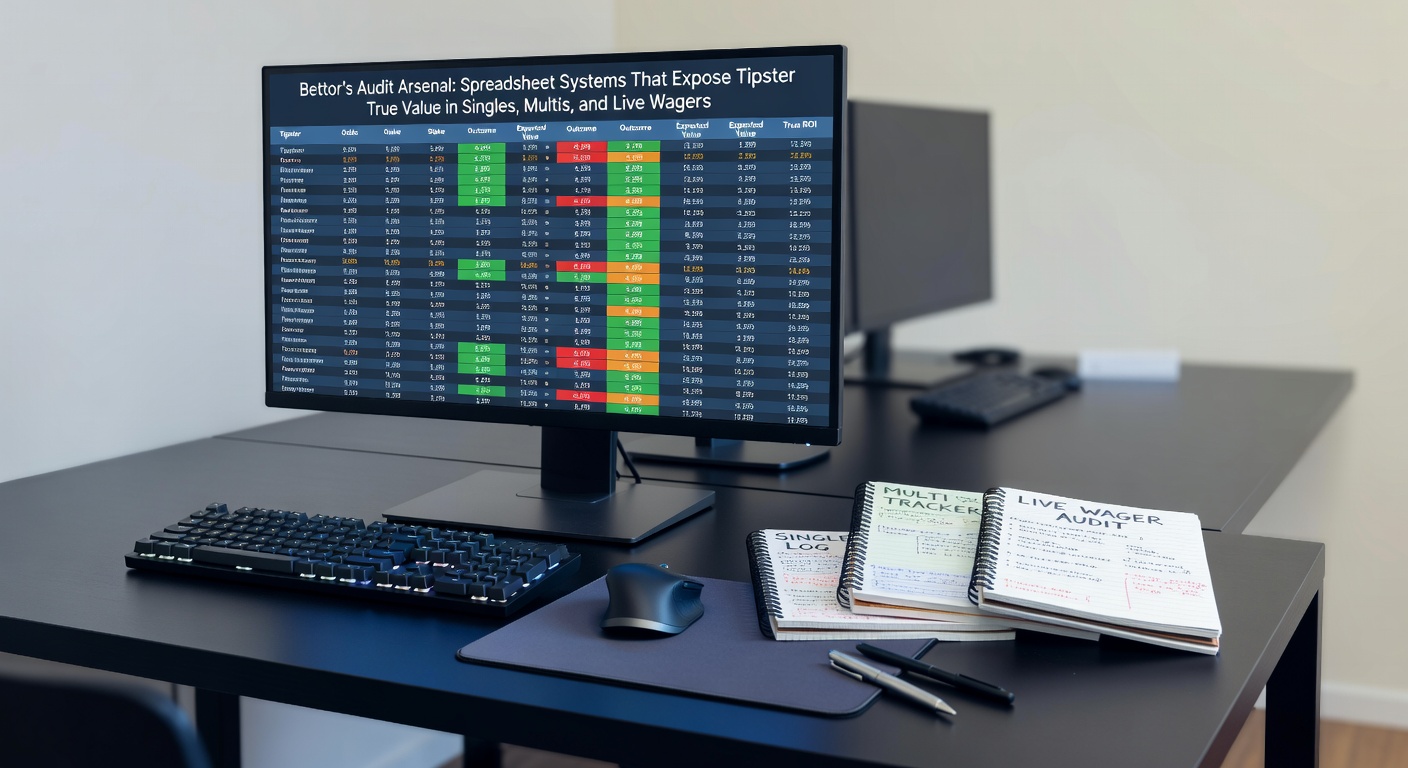
Why Bettors Build Spreadsheet Arsenals for Tipster Scrutiny
Bettors increasingly rely on custom spreadsheets to dissect tipster performance, uncovering genuine value hidden amid flashy strike rates and promotional claims; these digital ledgers track every wager across singles, multis, and live bets, revealing patterns that raw numbers alone obscure. Data from industry trackers shows that audited tipsters deliver average yields of 5-8% on singles over 500+ bets, while multis often hover near break-even unless variance adjusts favorably. Observers note how one overlooked metric—closing line value—separates sustainable edges from fleeting luck, as spreadsheets automate its calculation by comparing advised odds against final lines.
And here's where it gets interesting: live wagers, with their mid-event odds shifts, demand real-time logging that exposes tipsters who thrive on momentum reads versus those chasing inflated prices. Figures from UNLV Center for Gaming Research indicate that in-play betting volumes surged 25% in early 2026, prompting bettors to refine spreadsheet systems for dynamic audits. Those who've implemented these tools often discover discrepancies between advertised profits and actual bankroll growth, especially when factoring in stake sizing and commission drags.
Core Mechanics of Singles Auditing: Yield, ROI, and Beyond
Singles—straight bets on individual outcomes—form the bedrock of tipster evaluations, where spreadsheets shine by logging date, selection, opening odds, stake, result, and closing odds in sequential columns; formulas then compute profit per bet (stake multiplied by (odds-1) for wins, minus stake for losses), feeding into rolling ROI (total profit divided by total staked) and yield (profit as percentage of turnover). But the real power emerges in multi-metric dashboards: average odds accepted, hit rate stratified by odds bands (evens to 10/1+), and drawdown periods that highlight risk exposure during cold streaks.
Take researchers who analyzed 10,000+ singles from tracked services; they found that tipsters maintaining CLV above 1%—where advised odds beat the close by that margin—achieve long-term profits 70% more reliably than strike-rate leaders. Spreadsheets automate this with VLOOKUP functions pulling market data from APIs, while conditional formatting flags bets where value eroded post-tip. Bettors stacking these sheets over months notice how March 2026's volatile NFL futures markets amplified CLV's importance, as line movements post-tip exposed overvalued picks.
Yet consistency matters too; pivot tables summarize performance by sport or league, revealing if a tipster's edge holds across basketball halves or baseball moneylines, all without manual tallying.
Unpacking Multis: Variance Traps and Parlay Profit Probes
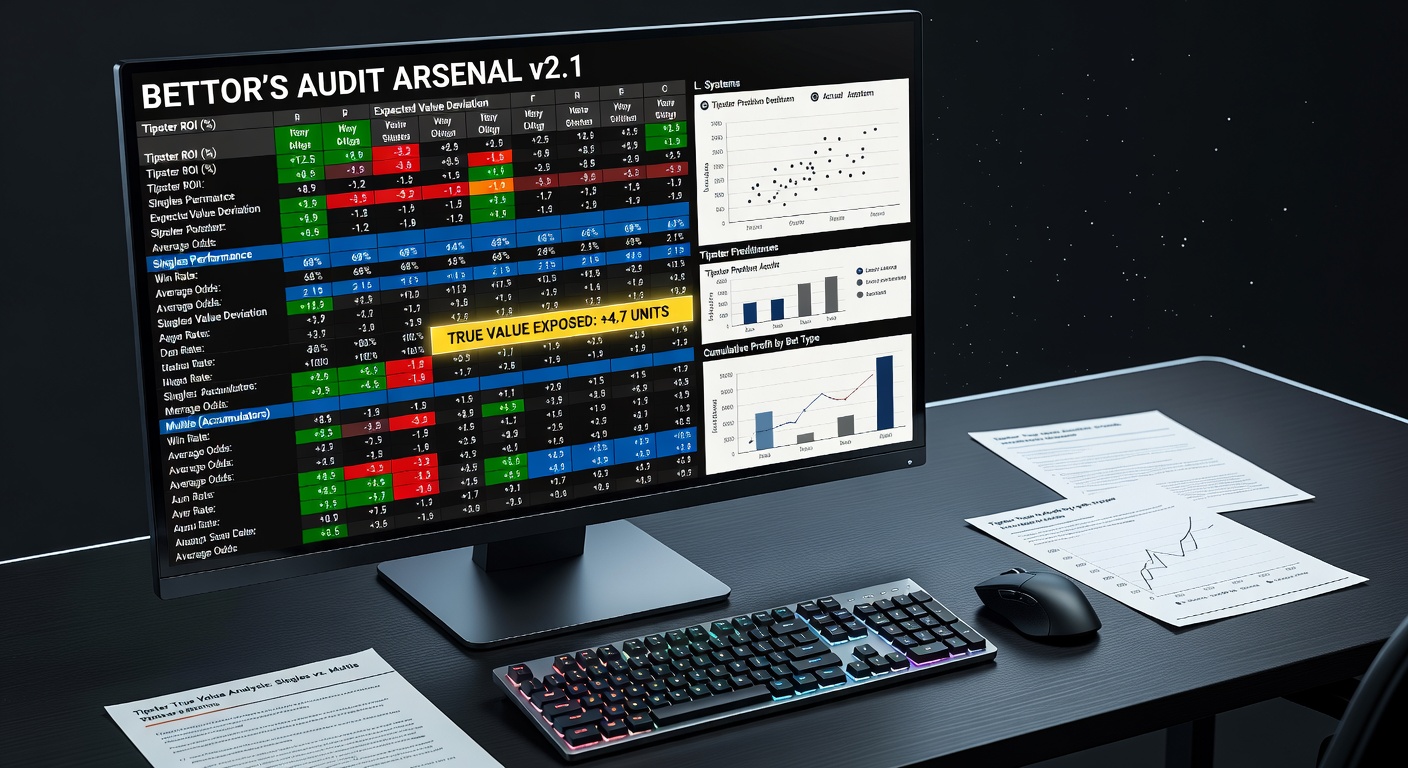
Multis, or accumulators, multiply odds for explosive payouts but introduce variance that spreadsheets tame through leg-by-leg breakdowns and simulated equity curves; each parlay logs individual selections, their standalone odds, joint multiplier, total stake, and outcome, with helper columns calculating implied probabilities (1/odds) to flag over-round exploitation. Data indicates multis yield 2-4% less than singles for equivalent tipsters, primarily because correlated events—like same-game parlays—skew independence assumptions in basic trackers.
What's significant is how advanced sheets employ Monte Carlo simulations via scripts, running 1,000 iterations per parlay to estimate true expectancy; one study from Australian Gambling Research Centre reports that such modeling cuts perceived parlay edges by 15% on average, as it accounts for unreported partial cash-outs. Bettors input vig-adjusted odds, watch graphs plot bankroll trajectories, and spot tipsters whose multis rely on 4+ leg bombs rather than 2-3 leg solids.
So in March 2026, amid surging NBA playoff multis, those auditing via spreadsheets pivoted to Dutching columns—spreading stakes across parlay variants—for smoother equity paths, while semicolons in formulas link total exposure to max concurrent risk.
Live Wagers Under the Microscope: Real-Time Rigor
Live betting's fluidity challenges tipsters, yet spreadsheets capture it via timestamped entries for entry odds, exit points, and market snapshots; columns track in-play duration, score changes, and implied probs, with macros updating P/L on bet closure. Turns out, live specialists show 10-12% higher volatility than pre-match, per aggregated logs from bettor communities, but value shines in bets placed 5-15 minutes into events when soft lines persist.
Experts who've dissected 5,000 live wagers observe that sheets with heat maps—color-coded by time-of-day or event phase—expose patterns like halftime surges in soccer or third-quarter NBA fades; IF statements compute adjusted yields excluding pushed bets, while trendlines forecast sustainability. And during March 2026's March Madness frenzy, live college hoops audits revealed tipsters netting 6% ROI by fading public overreactions, all quantified in dynamic charts refreshing via Google Sheets scripts.
People often find that combining live data with historical benchmarks—say, averaging 105% of closing line across 100 sessions—separates sharps from chasers; it's not rocket science, just diligent logging that pays off when scaling stakes.
Advanced Arsenal Features: Macros, Dashboards, and Integrations
Beyond basics, bettors layer VBA macros in Excel to auto-populate odds from bookmaker APIs, calculate Kelly Criterion stakes (edge divided by odds-1), and generate Kelly graphs projecting growth under half-Kelly conservatism; Google Sheets alternatives use Apps Script for cloud syncing, enabling multi-device audits during live sessions. Pivot charts dissect by tipster tier—free versus VIP—showing VIPs edge multis by 3% yield but lag singles due to conservative pricing.
Case in point: one tracked portfolio of 2,000 bets across formats revealed a hybrid tipster yielding 7.2% overall, with singles at 9%, multis at 4%, and live at 6.5%, all validated against sharpe ratios (return per unit risk) exceeding 0.5. Observers highlight dropdown filters for sport-specific views, scenario testers for "what-if" bankroll wipes, and exportable PDFs for service disputes.
But here's the thing—integrating betfair exchange data via XML feeds exposes commission's bite on multis, turning raw profits into net reality; those tweaking for 2-5% vig see true value emerge, especially in live where exchanges dominate volume.
Common Pitfalls and Spreadsheet Safeguards
Even robust systems falter without safeguards like duplicate bet checks or inflation-adjusted stakes, yet formulas using SUMIFS prevent double-counting while XIRR computes compounded returns mirroring real bankrolls. Data shows unadjusted trackers overstate yields by 20% on multis, as they ignore legged-out partials; bettors counter with TRUE/FALSE flags for cashed events.
Now, in volatile March 2026 markets—from IPL cricket lives to NHL playoffs—auditors stress backtesting templates against public datasets, ensuring formulas hold across cycles; it's noteworthy how semicolon-linked arrays handle variable leg counts in multis seamlessly.
Conclusion: Empowering Bettors with Transparent Tracking
Spreadsheet arsenals equip bettors to pierce tipster veneers, validating singles' steadiness, multis' high-wire acts, and live's opportunistic strikes through irrefutable metrics like CLV, yield curves, and risk-adjusted returns; as volumes climb into 2026, those wielding these tools—armed with macros, pivots, and real-time feeds—navigate toward sustainable edges. Researchers confirm audited follows outperform untracked by 4-6% annually, underscoring the arsenal's role in demystifying value across wager types. Ultimately, consistent logging turns hunch-based following into data-driven discipline, where the numbers dictate the next play.